Want to become the recipient of large amounts of hate mail and threats of harm? Try posting a picture of you fileting a 4- or 5-pound largemouth bass on social media and see what happens.
Keeping large or smallmouth bass, as long as they are within proper bag and size limits, is legal. Contrary to some beliefs, smaller bass are good to eat. Yet most practice catch-and-release with this particular species. It’s almost a religious experience to devout bass anglers.
On the other hand, bluegills and crappies are a different story. One person I know says if they are big enough to bite, they are big enough to keep.
I remember fishing with a good friend who loves bluegills. We were fishing a large pond and the bite was good. We caught bluegills in various sizes. After putting several respectable-sized fish in the cooler, I noticed him throwing several small ones on top of the ice as well.
“Kind of small aren’t they?” I asked, as he placed another 4- or 5-inch fish in the box. “You like potato chips don’t you?” he quipped back.
So why is public perception on whether or not to keep or release certain fish species so different? Why do some fish get released alive while others get a trip to the frying pan?
Philosophies and approaches to fish management and perceptions have changed through the years. Back in the day people fished for food. Very little was thrown back. Today, we have a much better understanding of fish structure and population dynamics because of in-depth studies by fisheries biologists.
Should I keep this fish or throw it back? For some people, large and smallmouth bass have become a sacred cow. There is no doubt catch and release has played an important role in providing a much better fishery in larger lakes and reservoirs.
But there is also a second side to this story. This summer I have had the opportunity to fish four different private ponds. Three of the four owners asked me to keep all bass under 12 inches. Why? Because the small bodies of water were overrun with small bass. I want to mention that even though there are size and bag limits on public waters, privately owned ponds are exempt from this rule.
Larger lakes and reservoirs have substantial fishing pressure, especially for bass. They usually have more fish species than smaller ponds as well. Baby bass have to face a gauntlet of factors before reaching adulthood. In these cases catch and release seems to be the right thing to do. After all, baby bass grow up to be big bass, right?
However, is catch-and-release the best practice on small ponds? Some studies show that long-term catch-and-release can also have a negative impact. Large numbers of smaller, aggressive fish can devour a pond or lake’s food source much quicker and efficiently than a smaller number of larger fish.
In those cases, people need to take home smaller fish. If you’re fishing a public lake there is nothing wrong with keeping a few smaller bass as long as they meet minimum size requirements. In addition, there is no shame in keeping a large one to mount. Biologists have established size and bag limits for a reason. To protect our public fisheries so there is nothing wrong staying within set boundaries. Most privately owned waters do not get the best management practices afforded to public waters, unless you hire your own biologists.
To some degree, catch-and-release may have hurt fishing. New anglers want to go home and “show” they did some good not just tell about it. Maybe we are becoming overzealous in our conservation practices. We talk about the good old days of fishing. However, back then we would bring home everything we caught.
Even if you have been a diehard catch-and-release angler, you’ll have to rethink what conservation is all about. Not every little fish released will grow up to be a trophy and not every large bass removed cause harm to the fishery. The outdoor ethics of catch-and-release may not be the total answer to protecting our states public and private waters, but proper fish management will.
I believe the state does a good job in managing our fishery resources from state line to state line. However, sometimes, as long as we are legal, we have to do what is right in our mind as well, regardless of what others may think.
KIDS FISHING CLINIC
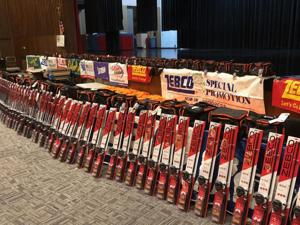
Monday marks the beginning of the 40th annual Jim “Moose” Carden Kids Fishing Clinic. The two-week long program will take place at Kokomo High School beginning at 6:30 p.m. All participants are asked to use the south entrance and report to the auditorium.
Class sessions are scheduled for Monday, Tuesday and Thursday of next week and July 23 and 25 at the school. The graduation tourney will be held July 27 from 7 a.m. to noon at the Kokomo Reservoir.